TIPS & TRICKS › LESSONS
3-Hour, 4-Hour or Full-Day Ski and Snowboard Lessons in Niseko?
How to choose the right lesson length for your level, your fitness and what you want from the day.
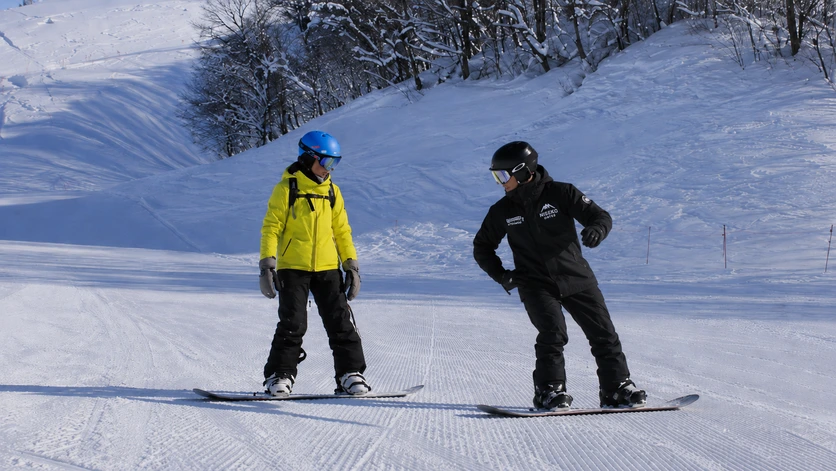
Choosing the right ski lesson duration in Niseko depends on more than your budget. Whether you ski or snowboard, your current ability, physical condition, goals and the type of experience you want all influence how much time you should spend with an instructor.
A beginner learning from scratch has very different needs from an experienced snowboarder looking for powder lines. Someone focused on improving their technique may benefit from four hours in the morning, while someone who wants to explore Niseko and receive feedback throughout the day might prefer a full-day lesson.
After many seasons teaching skiing and snowboarding in Niseko, I have learned that there is no single duration that works for everyone. The key is understanding what you want to achieve and choosing a lesson that gives you enough time to work towards it.
Quick Answer
- 3 hours works when you have one clear goal, like fixing a specific turn or skill.
- 4 hours in the morning is the best balance for most beginners and intermediates: you learn while the snow and your legs are fresh.
- A full day makes sense to explore Niseko, look for powder or work on several goals with feedback all day.
- More hours don’t guarantee more progress: clear goals, the right terrain and practice between lessons matter more.
Is a 3-Hour Lesson Enough?
A three-hour private lesson can work well if you have a specific objective and want to focus on particular aspects of your skiing or snowboarding.
Your instructor can assess your current ability, identify areas for improvement and introduce exercises to help you develop your technique. For example, an intermediate skier might want to improve their turns, while a snowboarder could be working on body position or becoming more comfortable on steeper pistes. Three hours can be enough to make progress, particularly if you already have a solid foundation.
However, beginners sometimes find this duration too short. It can take time to understand unfamiliar movements, develop coordination and start applying what the instructor explains. In lessons with several people, everyone progresses at a different pace. Sometimes, just as the group starts getting the hang of things, the lesson ends: the students have begun to understand the movements, but they need more time to practise and consolidate them.
Three hours can also feel restrictive if your objective is to explore different areas of Niseko or search for powder lines within the resort. Depending on the conditions and your ability, finding suitable terrain and working on the skills needed to ride it can take time.
A three-hour lesson is a good option for focused instruction, but you should choose your objectives realistically.
Why Four Hours Can Be the Best Balance
For many people who want to improve their skiing or snowboarding, I recommend considering a four-hour morning lesson.
The additional hour provides more time to practise, revisit exercises and apply feedback. This can be particularly valuable when you are learning new movements or trying to make your technique more consistent. Understanding what you need to do and being able to do it repeatedly are two different things. Sometimes, you need time to get through the first stage before you can begin consolidating the skill.
For beginners
Four hours can provide a useful balance between instruction and practice. However, your physical condition matters. Someone who is not accustomed to exercise may find a long session exhausting, especially when learning unfamiliar movements.
Weather and snow conditions also influence how comfortable and productive the lesson will be. For this reason, four hours is a sensible starting point for many beginners, but a full day may be appropriate for some and too demanding for others. If you are planning lessons for children, see our guide to skiing with kids in Niseko.
For intermediate riders
Intermediate skiers and snowboarders often have enough experience to understand technical explanations and start applying them on the mountain. Four hours gives you time to work on related skills without rushing through every exercise. It can also leave you with the afternoon free to practise independently.
For advanced riders
If you are an experienced skier or snowboarder looking to improve your technique or find powder within the resort, four hours can be a good option. A full day may be more appropriate if you want to explore a larger area or spend the day with a professional who can help you choose terrain and provide feedback.
If your goal is to explore the Niseko backcountry through the gates, consider a dedicated gate-guiding experience rather than assuming that a standard resort lesson offers the same service.
When Is a Full-Day Lesson Worth It?
A full-day lesson offers more than additional instruction time. It gives you the flexibility to explore Niseko, work on several aspects of your technique and receive feedback throughout the day.
Some clients want to spend the entire day skiing or snowboarding with someone who knows the resort well. They want to discover suitable areas, receive suggestions about where to go, improve their technique and have a professional keeping an eye on them. In these situations, the value lies in both the instruction and the experience of having a knowledgeable person alongside you.
What does a full day look like?
A full-day lesson does not mean skiing or snowboarding continuously without stopping. Depending on the day, we would usually take a lunch break after approximately three or four hours, followed by around two more hours on the mountain. The schedule depends on the client’s energy, the weather and the snow conditions.
The pace also changes throughout the day. Sometimes we cover more terrain and spend less time talking. At other times, we stop to work on specific exercises, discuss technique and prepare for the next run.
Everything is adapted to the client. One of the advantages of private instruction is that the client helps determine the pace. As I often explain:
I know the steps we need to follow; you decide when you move your feet.
If you need a break, we adjust. If you feel strong and are making progress, we can continue working. The objective is to make the available time useful, not to force everyone through the same schedule.
A full day is particularly worth considering if you want to explore much of the resort, work on several technical goals or receive guidance throughout your time on the mountain. However, it is important to consider your fitness: more hours do not automatically mean more progress.
Why the Morning Is Often Best for Technique
For focused technical instruction, I generally prefer a morning session.
One reason is the condition of the pistes. After grooming, prepared runs are often smoother and less affected by the traffic of the day. This can make it easier to concentrate on specific movements without dealing with as many bumps or irregularities.
Morning sessions can also be attractive after fresh snowfall if your objective is to enjoy powder within the resort. Conditions are never guaranteed, however, and the best plan depends on the mountain that day.
Spring can be different. As temperatures rise, the snow changes more quickly and pistes may become increasingly bumpy. That does not mean you cannot work on your technique. Bumps can provide useful terrain for developing skiing and snowboarding skills, provided they are appropriate for your ability. The important thing is to select the terrain according to what you want to practise.
What should you do in the afternoon?
For many clients, four hours of instruction in the morning followed by independent practice is an excellent balance between cost, learning and freedom. You can focus on technique while you are fresh, then spend the afternoon applying what you have learned.
Alternatively, a full-day lesson allows you to continue practising while receiving feedback from your instructor. Both options can work well; the right choice depends on whether you prefer to practise independently or continue learning with professional guidance.
Why the Right Terrain Matters
Knowing Niseko well makes a difference because not every piste is suitable for every exercise. Slope gradient matters, but so do piste width, traffic and the space available to practise.
A wide, relatively quiet piste may be ideal for working on turns and body position. A narrower or busier run can make the same exercise more difficult, even if the gradient is similar.
An instructor who knows the resort can choose terrain according to your ability and objectives. This is particularly important when time is limited: the goal is not simply to cover as much ground as possible, but to find the right place to practise the right skill.
The same principle applies to advanced riders. Finding powder is not just about locating fresh snow. The terrain must suit your ability, and you need sufficient control to ride it appropriately. A well-planned three- or four-hour lesson can therefore be more productive than a longer session spent on unsuitable terrain.
More Hours Do Not Guarantee More Progress
One of the most common misconceptions about ski and snowboard lessons is that you will finish the session having learned everything you were shown. In reality, there is a big difference between understanding what you need to do and being able to do it consistently.
During a lesson, your instructor explains movements, demonstrates techniques and gives you tools to work with. You then need to practise those movements, recognise when they are working and repeat them until they become more reliable. This process cannot be reduced to a fixed number of hours.
Your physical condition, attention, coordination and willingness to practise all influence how you learn. Some people understand a new movement quickly but need considerable repetition to apply it consistently. Others need more time to understand the movement in the first place.
That is why I would not promise that a student will reach a particular level after three, four or six hours. A lesson provides direction and feedback, but progress also depends on what happens after the session.
Progress also means knowing your limits
Learning new skills can make you more confident, but confidence should develop alongside control. For example, being able to link turns on groomed pistes does not automatically mean you are ready for the snowpark. Poor body position and insufficient control can increase the risk of injury when attempting freestyle features.
Similarly, deep powder can be physically demanding for someone who is still struggling to control their speed. Before considering riding through the Niseko gates, you should also be able to ski or snowboard the resort’s groomed pistes with control. Our guide to the skills to build before leaving the pistes explains what that means in practice.
The objective is not to rush towards the next challenge. It is to develop the skills needed to approach it appropriately. A good lesson should help you understand both what you can work on now and what you need to practise before progressing.
How to Plan Lessons Over Several Days
If you are staying in Niseko for several days, you do not necessarily need to book a full day of instruction every day. For someone who wants to make substantial technical progress, a combination of full-day and morning lessons can work particularly well.
You could begin your holiday with a couple of full days of instruction. This gives your instructor time to assess your ability, help you recover familiar movements after a break from skiing or snowboarding, identify technical issues and work on improvements. You can then continue with morning sessions on subsequent days, leaving the afternoons free to practise independently.
This approach combines focused instruction with the freedom to enjoy the mountain at your own pace.
It is not the right plan for everyone. The number of lessons you need depends on your goals, fitness, budget and how much time you want to spend with an instructor. If you mainly want to enjoy the mountain with friends, one lesson may be enough. If improving your technique is a priority, several sessions may be worthwhile. If you feel stuck at the same level, read why intermediate skiers plateau.
The important thing is to plan around your objectives rather than assuming that more booked hours will automatically produce better results.
Which Ski Lesson Duration Should You Choose?
Use the following as a starting point when deciding between three hours, four hours and a full day.
| Your main objective | Duration to consider |
|---|---|
| Work on one specific technical issue | 3 hours |
| Improve technique and allow time to practise | 4 hours |
| Learn to ski or snowboard, depending on fitness and conditions | 4 hours or longer if appropriate |
| Improve in the morning and practise independently afterwards | 4 hours |
| Explore more of Niseko with an instructor | Full day |
| Work on several technical goals and receive feedback throughout the day | Full day |
| Spend the day with a professional who knows the resort | Full day |
| Explore the Niseko backcountry through the gates | Consider a dedicated gate-guiding experience |
These are guidelines, not strict rules. Your instructor should take your current ability, physical condition and objectives into account when planning the session.
Final Thoughts
The best ski lesson duration is not necessarily the longest one. It is the option that gives you the right balance between instruction, practice, physical effort and enjoyment.
For many skiers and snowboarders who want to improve their technique, four hours in the morning can be an excellent starting point. You can work on specific skills while you are fresh and then practise independently during the afternoon. A full day may be more appropriate if you want to explore Niseko, work on several aspects of your skiing or snowboarding, or receive feedback and guidance throughout the day. If you are a beginner, your physical condition and the weather should help determine how long you spend on the mountain with an instructor.
Whatever duration you choose, remember that a lesson is the beginning of a learning process, not a shortcut around it. Your instructor can show you the steps, explain what to change and help you understand how to improve. The next step is to practise.
The goal is not simply to spend more hours on the mountain. It is to make those hours count.
Ready to choose? Explore our private ski and snowboard lessons or read how our booking process works.
Learn It Faster with a Coach
The right length depends on what you want to achieve. Tell us your level and your goals, and we’ll suggest the format that makes the most of your time in Niseko.
Private Lessons
One-to-one ski or snowboard coaching in 3-hour, 4-hour or full-day formats, built around your level and goals. Private lessons in Niseko →
Group Lessons
Learn with friends or family at a similar level and share the time on the mountain. Group lessons in Niseko →
Freeride Foundations
Ready for more than groomers? Build the powder and tree skills you need before thinking about the gates. Freeride Foundations →
January and February days fill first. See how booking works.
Frequently Asked Questions
Is a 3-hour ski or snowboard lesson enough in Niseko?
Yes, if you have one specific goal, such as improving your turns or your stance. For complete beginners it often feels short, because it takes time to understand new movements and start applying them.
Is a 4-hour or a full-day lesson better for beginners?
For most beginners, four hours in the morning is the best balance. You learn the basics while you are fresh and can practise on easy terrain afterwards. A full day can be very tiring on your first day.
Can I book a full-day private lesson for my family or friends?
Yes. A private group lesson lets you share the instructor and the cost, and it works best when everyone has a similar level and similar goals.
Is it better to book several shorter lessons or one long one?
Often several shorter lessons spread over your trip work better. You practise what you learned between sessions, and each lesson builds on the last one.
Keep Reading
CONTINUE READING
Skiing and Snowboarding with Kids in Niseko: A Parent’s Guide
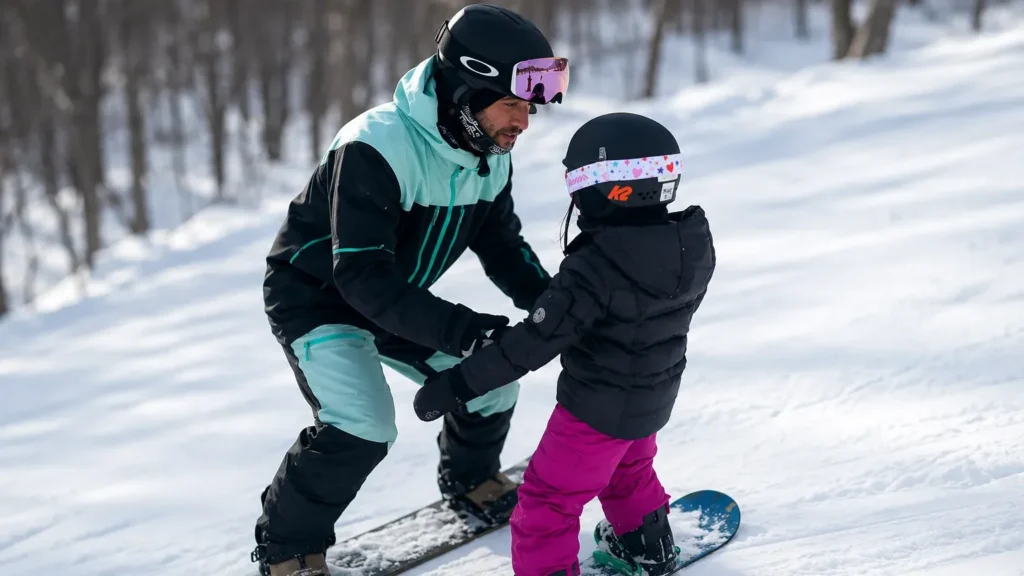
Your next step: how to plan a family ski holiday, from lessons to keeping kids warm.
Not sure which lesson fits you?
Tell us your level, your dates and what you want to achieve, and we will help you choose the right duration.