TIPS & TRICKS › FAMILY
Skiing and Snowboarding with Kids in Niseko: A Parent’s Guide
How children learn, what to wear, where to ski and how to plan lessons so the whole family enjoys the holiday.
Skiing with kids in Niseko can be the highlight of a family holiday. Its famous powder snow, winter scenery and variety of terrain offer plenty of opportunities for children to discover skiing and snowboarding.
However, introducing children to snow sports requires more than finding the right slopes and putting them in lessons. Their age, personality and confidence all influence how they learn. The weather matters, too: Niseko’s cold temperatures, wind and heavy snowfall can make a big difference to a child’s experience on the mountain.
As a snow sports instructor, I’ve learned that the most successful family holidays aren’t necessarily the ones where children make the fastest technical progress. They’re the ones where children enjoy themselves, build confidence and finish the holiday wanting to come back next winter.
If you’re planning a family trip to Niseko, here are some things worth considering before you hit the slopes.
Quick Answer
- Kids can start skiing from around three years old; snowboarding usually clicks a bit later, often around eight or nine.
- Short, playful sessions work best for young children: confidence and fun come before technique.
- Easy terrain matters: Niseko Annupuri and the lower area of Hanazono are good places to start.
- Let an instructor teach and you enjoy the day: kids often progress faster, and with less stress, when a parent isn’t the coach.
Choosing Between Skiing and Snowboarding for Your Child
One of the first decisions parents face is whether their child should learn to ski or snowboard. Both are great ways to enjoy the snow, but the initial learning experience can be quite different.
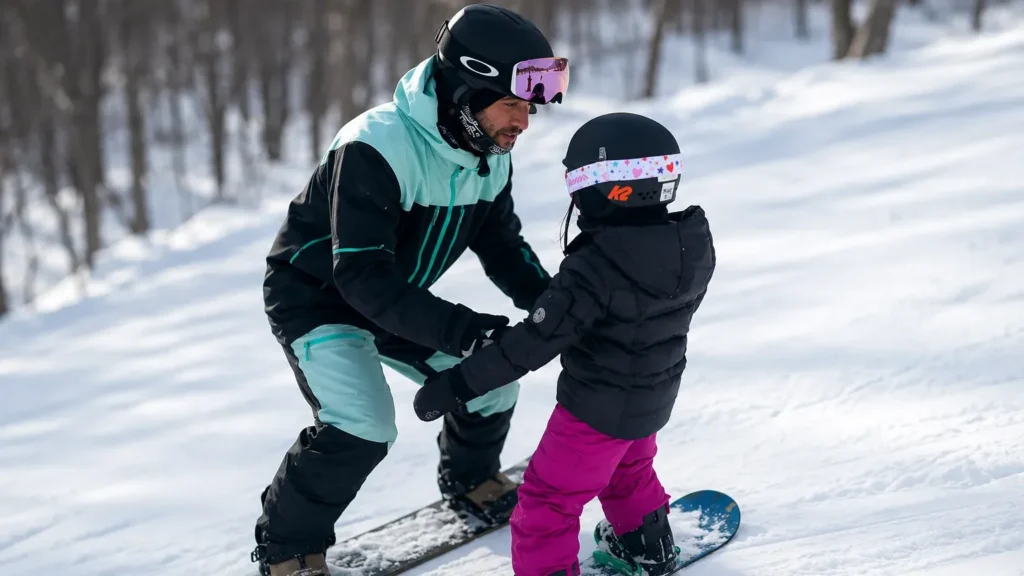
Children can start learning to ski from around three years old, depending on their physical development, attention span and individual needs. Skiing is generally more intuitive at the beginning because each foot moves independently. Many young children find it easier to get comfortable sliding and start moving around on gentle slopes.
Snowboarding is also possible at a young age, but parents should be prepared for a more challenging initial learning curve. With both feet attached to the same board, children must learn to balance sideways, control their edges and become comfortable with unfamiliar movements.
Around eight or nine years old, many children can work on these movements more efficiently, although every child is different. Age alone doesn’t determine how quickly they will progress.
One common misconception is that a six-year-old will take two lessons and then confidently descend the mountain linking turns. In reality, even relatively simple tasks, such as managing snowboard bindings, can be challenging for young children.
Social media can make learning look deceptively easy. Videos of very young children riding confidently rarely show the time, repetition and support behind those skills. If an older child already snowboards, see our guide to snowboard progression in Niseko.
Your child’s preferences should be part of the decision. If they are excited about snowboarding, that enthusiasm is worth encouraging, provided expectations remain realistic. If your main goal is to enjoy easy ski runs together as a family, skiing may be the more practical starting point for a very young child.
The important thing is to choose a discipline your child enjoys without rushing the learning process.
How Children Learn to Ski and Snowboard
Children don’t learn snow sports in the same way as adults. Young children, in particular, learn through imitation, sensations, repetition and games rather than lengthy technical explanations.
From 3 to 9 years old, lessons should focus on developing coordination, balance, confidence and familiarity with the snow. Technical progress matters, but it shouldn’t be the main measure of success.
Some children are naturally active, adventurous and eager to try new things. Others are more cautious and need additional time to feel comfortable. Both approaches are perfectly normal, and children shouldn’t be compared with their siblings, friends or other students.
For very young children, I generally recommend lessons of no more than two hours. Older children may be able to manage three-hour lessons, half-day sessions or even full days, depending on their energy, personality and relationship with the instructor. For adults and older riders, our guide to 3-hour, 4-hour and full-day lessons covers the options.
After a few lessons, one child might be comfortable on easy slopes, while another may still be working on balance and basic movements. Snowboarding can require more time at the beginning, but progress in either discipline depends on the individual child.
For young children, the best goal is to develop a passion for snow sports rather than chase rapid technical progress.
If your child finishes the holiday having had fun and asks to come back next year, that’s an excellent result.
Why Learning With an Instructor Can Make Family Holidays Better
Many parents come to Niseko because they love skiing or snowboarding and want to share that passion with their children. Naturally, they imagine exploring the mountain together, enjoying the powder and spending long days on the slopes as a family.
The challenge is that parents also want to ski themselves.
Sometimes, without realising it, they put pressure on their children to learn quickly so that everyone can start skiing together. When a child struggles with a movement or needs more time than expected, frustration builds. The parents become impatient, the child feels pressured, and a day that should have been fun turns into a difficult experience for everyone.
This is one of the reasons professional instruction can make such a difference.
An instructor’s job is to teach the child. They can adapt the lesson to the child’s personality, allow time for repetition and introduce skills through games and demonstrations. They also have the patience to work at the child’s pace without the same pressure to get back out on the mountain.
Parents don’t always need to watch the entire lesson, either. With very young children who are particularly dependent on their parents, having mum or dad nearby can sometimes make it harder for them to concentrate or try something unfamiliar.
Depending on the child’s personality, it may be better for parents to leave the immediate lesson area while remaining reachable by mobile phone. Make sure the instructor has your contact details in case they need you. Other children may feel more comfortable knowing their parents are nearby, so it’s worth discussing the best approach with the instructor.
Group lessons with other children can also be a good option. Learning alongside peers can make the experience more social and enjoyable. If you are comparing formats, our guide to private and private group lessons can help.
The aim isn’t to separate parents and children throughout the holiday. It’s to give children the opportunity to develop their skills independently so that, when the time comes, the family can enjoy the slopes together without unnecessary pressure.
Looking for a lesson format? See our private ski and snowboard lessons or our group lessons.
Keeping Kids Warm and Comfortable in Niseko
Proper clothing can make the difference between a fantastic first experience and a miserable day on the mountain.
Niseko is famous for its snowfall, but winter conditions can be cold, windy and demanding. A child who gets cold or wet may quickly lose interest, even if they were excited about skiing or snowboarding.
Before heading out, make sure your child has a well-fitting helmet, snow goggles and appropriate waterproof winter clothing.
Dressing in layers helps you adapt to changing temperatures and activity levels. The goal is to keep children warm and dry without making them so bundled up that they cannot move comfortably.
For young children, I generally prefer mittens to gloves. Keeping the fingers together can help retain warmth, and mittens can be easier to manage than gloves with separate fingers.
Chemical hand warmers can also be useful on particularly cold days. Always follow the product instructions and safety precautions, including any age restrictions. They shouldn’t be placed directly against bare skin, and children’s hands should be checked regularly.
Heavy snowfall, strong winds and very low temperatures may mean shorter lessons, more breaks or a change of plans. Children don’t always recognise or communicate that they are getting too cold, so pay attention to their behaviour and comfort throughout the day.
Warm, dry and comfortable children are much more likely to enjoy learning.
Where to Go Skiing with Kids in Niseko
Choosing suitable terrain is essential when travelling with children. A slope that feels easy to an experienced skier may be intimidating for a beginner who is still learning to control their speed and balance.
For children learning from scratch, Niseko Annupuri and the lower area of Hanazono are worth considering. Both offer areas where beginners can start developing their skills on easier terrain.
As conditions and terrain suitability can change, choose specific runs according to your child’s ability and check current resort information before heading out.
It’s also worth remembering that a family holiday doesn’t have to mean everyone skiing together all day. Parents may be comfortable on more challenging slopes, while their children need time and space to build confidence.
Consider booking lessons for the children while the parents enjoy some time on the mountain independently. Later, you can choose easy runs that everyone can manage together.
Group lessons can be particularly enjoyable for children who like social activities and learning alongside others. A private lesson may be more suitable for a child who needs individual attention or a pace tailored to their needs.
And don’t make every moment about technique. Playing in the snow, building snowmen and simply enjoying the winter environment are all part of the experience. For very young children, these moments can be just as important as learning to turn or control their speed. The aim is to help them associate the snow with fun, discovery and positive memories.
Four Mistakes to Avoid on a Family Ski Holiday
A successful family ski holiday starts with realistic expectations and a willingness to adapt. There are four mistakes I would particularly encourage parents to avoid.
Underestimating the weather. Cold temperatures, wind and heavy snowfall can affect children’s comfort, concentration and energy levels. Dress them appropriately and be prepared to shorten the day if conditions become difficult.
Choosing slopes that are too challenging. Select terrain based on your child’s current ability rather than the level of the adults in the family. Building confidence on easier runs creates a better foundation for future progress.
Booking lessons too late. Niseko is a popular winter destination, and availability can be limited during busy periods. If professional instruction is important to your plans, arrange lessons in advance rather than waiting until you arrive. Our booking process explains how to get started.
Expecting everyone to ski together from day one. Sharing the mountain is a wonderful goal, but it doesn’t have to happen immediately. Give children the time they need to develop their skills before expecting them to join you on your favourite runs.
Above all, be patient
Children learn at very different speeds and in different ways. Some will be eager to try everything, while others need reassurance and repetition. Avoid comparing them with other children, and don’t let the desire to progress quickly overshadow their enjoyment.
If I could give parents one piece of advice, it would be this: focus on helping your children enjoy the snow enough to want to return next year.
When children are very young, developing a lasting interest in skiing or snowboarding is more important than mastering a particular technique in a few days. Skills can develop over many winters, but positive first experiences help create the motivation to keep learning.
Plan Your Family’s Snow Holiday in Niseko
Every child is different, which is why the right lesson format, terrain and pace matter. Whether your child is trying skiing for the first time or beginning to learn snowboard, professional instruction can help make the experience more enjoyable and appropriate for their needs.
Explore the private ski and snowboard lesson options at Niseko Gates and plan a family experience around your children’s age, ability and goals.
Learn It Faster with a Coach
A good kids’ lesson is patient, playful and adapted to your child’s personality. Tell us their age, level and how they feel about the snow, and we’ll suggest the right format.
Private Lessons
One-to-one ski or snowboard lessons for your child, at their pace, with time for games, repetition and confidence. Private lessons in Niseko →
Group Lessons
Siblings or friends at a similar level can share one instructor and learn together. Group lessons in Niseko →
How Booking Works
Plan lesson days around your family trip and secure the dates you want before they fill up. See how booking works →
January and February days fill first, especially during school holidays. See how booking works.
Frequently Asked Questions
What is the best age for kids to start skiing in Niseko?
Many children can start skiing from around three years old, depending on their physical development and how comfortable they feel in the snow. Age alone doesn’t decide how fast they will progress.
Should my child learn to ski or snowboard first?
Skiing is usually easier for very young children. Snowboarding is possible at a young age, but the first days are more demanding, and many kids find it easier from around eight or nine.
Where should children learn to ski in Niseko?
Gentle, quiet slopes are key. Niseko Annupuri and the lower area of Hanazono are good options for beginners, but choose specific runs based on your child’s level and the conditions.
Is a private lesson worth it for kids?
Often, yes. An instructor adapts the lesson to your child, uses games and repetition, and has the patience that is hard to keep as a parent. A private group lesson is a good option for siblings with a similar level.
Keep Reading
CONTINUE READING
What to Expect From a Private Snowboard Lesson in Niseko
Your next step: how a snowboard lesson day works, from the first run to the drills you take home.
Planning lessons for your children?
Tell us their ages, their experience and what you would like from the week, and we will help you choose the right lesson format.