TIPS & TRICKS › SNOWBOARD LESSONS
What to Expect From a Private Snowboard Lesson in Niseko
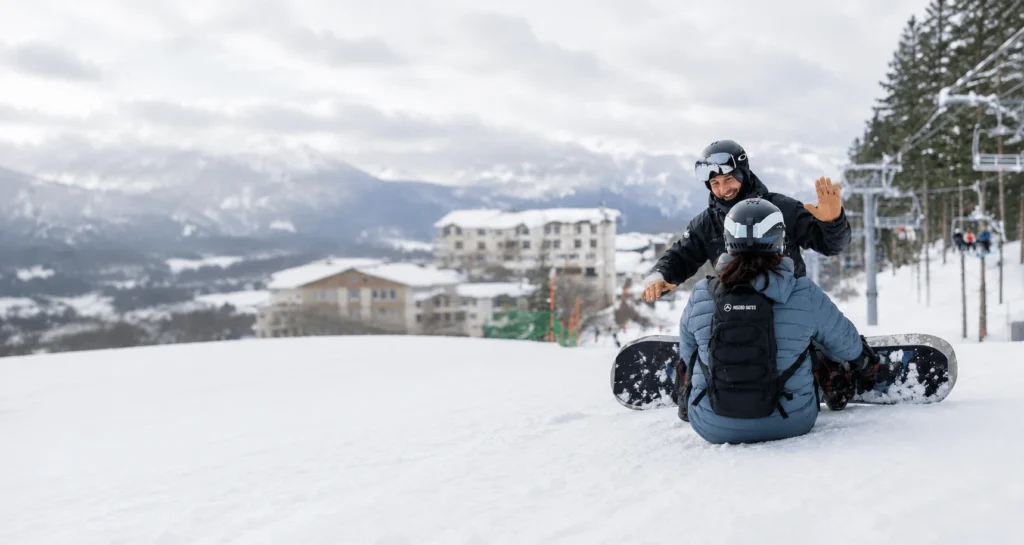
From the first run to the last lap: how a private snowboard lesson in Niseko works, what we actually work on and how to arrive ready.
Most people book a lesson in Niseko without really knowing what the day will look like. Will you spend three hours on the beginner slope? Will you get anywhere near the powder? And how much can one instructor actually change in a morning?
This post explains what to expect from a private snowboard lesson in Niseko, from the first chairlift to the last run, and how to get the most out of it. If you are still deciding how long to book, start with our guide to 3-hour, 4-hour or full-day lessons.
Quick Answer
- Safety first, then learning or fun. That order never changes; how much of each is up to you.
- The first run is an assessment. Your instructor watches you ride before deciding what to work on.
- One or two key fixes, not ten, practised on easy terrain where you can focus on technique, not on surviving.
- You leave with homework. The lesson gives you the tools; practice is what makes them stick.
1. Before the Lesson: Meeting Point, Timing and Gear
Our snowboard lessons usually start at 8:30am, and Grand Hirafu base is our favourite meeting point. Resort rules mean instructors cannot meet clients in Hanazono or Hirafu Village, so we confirm the exact spot when you book. Early starts are worth it: the first hours usually have the best snow and the shortest lift queues.
Come with your lift pass already bought and your gear sorted. Lift passes, rental and lunch are not included, so it pays to pick up rental the afternoon before rather than queueing on the morning of your lesson.
- Board and boots: an all-mountain board is perfect; you do not need a powder board. Make sure your boots are done up properly.
- Bindings: tell your instructor your stance if you know it (regular or goofy, angles).
- Goggles and proper snow clothing: the two things beginners forget most often. Niseko in January is cold, windy and snowy.
- Phone: charged, if you want video of your riding.
- A calm head: the thing almost everyone forgets. Bring patience, and leave a bit of the fear at home.
2. The First Run: Watching You Ride
The first run is not a test you can fail. Your instructor follows you down an easy run and watches. What we look at depends on your level. With beginners it is mostly the gear: is the board set up correctly and are the boots tight enough? With riders who can already get down the mountain, we look at coordination, stance, technique and speed control.
After that run you will talk for a minute about what you want from the day. Some riders want to stop catching edges on the heel side. Others want to link turns on steeper blues, or feel confident the first time they ride powder.
Whatever you ask for, one rule stays the same: the first goal of every lesson is safety. After that, the balance between learning and having fun is up to you.
3. What to Expect From a Private Snowboard Lesson: One or Two Key Fixes
This is where most of the lesson happens. Rather than ten corrections at once, a good lesson finds the one or two changes that will make the biggest difference to your riding.
Common mistakes we see in intermediate riders
- Weight on the back foot, so the board stops responding.
- Counter-rotation, turning with the upper body instead of the legs and the board.
- Hips out of position, which throws off your balance on every edge change.
- Trying to go too fast before the turns are under control.
On its own, each one is manageable. Put them together and you have the perfect combination for catching an edge.
Snowboarding works in clicks
The technique is easy to understand. What really changes your riding is finding a new feeling, the right one, and then trying to repeat it run after run. That click is what we are looking for in every lesson. If you want more detail on the technique itself, our post on snowboard progression in Niseko covers heel-side turns, edge control and carving step by step.
Flat sections and cat tracks
Niseko has plenty of flat traverses and cat tracks, and there is no magic trick: it takes confidence, a good stance and kilometres on the board. On short flats, keep your turns wide and open so you do not lose speed. If there is really no way through, your instructor will help you across. And we avoid Holiday Run at all costs.
4. Choosing the Terrain on the Day
No two lesson days in Niseko look the same, because the terrain follows the snow and the wind. We check the conditions every morning, along with the official Niseko United lift status, before deciding where to ride.
For practising technique we love Annupuri: fewer people, wide runs and gentler slopes. It is great once you start linking turns, although for complete first-timers it can sometimes feel too flat. Runs that demand a lot of effort are the wrong place to practise technique, because you end up thinking about surviving instead of what you are trying to improve.
| Conditions | Where we usually ride | What we focus on |
|---|---|---|
| Fresh snow, calm | Soft edges of the pistes, gentle tree areas | Stance and balance in powder |
| Windy, upper lifts on hold | Easier runs you already know | Technique, with harder drills on familiar terrain |
| Firm groomers | Wide, quiet blue runs | Carving and clean edge changes |
| Busy holiday days | Quieter lifts and side runs | Flow and confidence |
When you are ready, we will take you into soft snow just off the piste. Going beyond the ski area boundary is a different step: it needs avalanche gear and a separate course, which you can read about in our safety section.
5. Video Feedback (If You Want It)
On request, your instructor films a few of your turns and shows you the clip on the chairlift. Seeing yourself ride often helps you find that click faster, because the feeling and the picture finally match.
6. The Last Run and Your Homework
The final run puts everything together: one longer run where you ride with the new technique without stopping. Then you get two or three drills to keep practising on your own for the rest of your trip.
“You don’t learn only in the lesson. I give you the tools; you have to practise to make them your own.”
Many riders book a second lesson two or three days later. That gives you time to practise the drills alone, and lets your instructor build on them instead of starting again.
The Key Takeaway
That is what to expect from a private snowboard lesson: not as many runs as possible, but finding the one or two changes that unlock your riding, practising them on the right terrain for the day, and leaving with drills you can keep using for the rest of your trip.
Learn It Faster with a Coach
Private Lessons
One-to-one snowboard or ski coaching built around your goals, your level and the snow on the day. Private snowboard lessons in Niseko →
Freeride Foundations
For riders who are confident on the piste and want to start riding powder and soft snow safely. Freeride Foundations →
Group Lessons
The same coaching approach in a small group, if you are travelling with friends at a similar level. Group lessons →
January and February days fill first. See how booking works.
Frequently Asked Questions
Do I need to be a good snowboarder to book a private lesson?
No. Private lessons work for every level, from your first turns to carving and soft snow. The first run is there to adapt the lesson to you, not to check that you are good enough.
Can we ride powder during a snowboard lesson?
Yes, if the snow and your level allow it. On fresh snow days we often use the soft edges of the pistes and gentle tree areas inside the resort to practise powder riding.
Can I share a private lesson with a friend or partner?
Yes. Safety comes first, so with two riders of different levels the lesson goes a little slower: the faster rider gets drills to work on section by section, while the instructor stays closer to the one with less experience. For bigger groups of friends, see our post on private vs private group lessons.
What should I bring to my lesson?
Your lift pass, your board and boots, goggles, proper snow clothing and a charged phone if you want video. Lunch, rental and lift passes are not included in the lesson.
Keep Reading
CONTINUE READING
When to Book Ski Lessons in Niseko
Which weeks fill first, how far ahead to book and why booking early gets you the most experienced instructors.
Ready to ride better on your next Niseko trip?
Tell us your level and your goals, and we will plan a private snowboard lesson around you.