GETTING STARTED › ARTICLE 02 OF 13
How to Prepare for Your First Backcountry Day in Niseko
Everything You Should Do Before Stepping Beyond the Resort Boundary
THE COMPLETE GUIDE TO SKIING THE NISEKO BACKCOUNTRY
ARTICLE 02 / 13
For many visitors, skiing beyond the Niseko Gates is one of the highlights of a trip to Japan. After days of riding resort powder, it’s natural to start wondering what lies on the other side of the boundary ropes, and whether it’s time for your first backcountry day in Niseko.
Excitement is part of the experience. But preparation matters just as much. Unlike skiing inside the resort, a successful backcountry day isn’t measured only by the quality of the snow. It’s shaped by the decisions you make before leaving your accommodation, the equipment you carry, your expectations and your willingness to adapt.
The visitors who enjoy their first backcountry experience the most aren’t necessarily the strongest skiers. They’re usually the ones who arrive prepared.
This guide explains how to get ready for your first day beyond the gates. If you’re still deciding whether you’re ready at all, start with Am I Ready to Ski the Niseko Backcountry?
Preparation Starts the Evening Before
Many first-time visitors focus entirely on what happens once they leave the resort boundary. In reality, the day begins much earlier.
Check the forecast, look at the expected snowfall and wind, organise your equipment and make sure everyone in your group knows the plan. On the morning itself, check our live Niseko conditions page and the live gate status. If you’re not sure how to interpret what you see, read How to Read Niseko’s Daily Conditions and Avalanche Report.
It’s also worth remembering that backcountry plans are rarely fixed. One route may look ideal several days before your trip, but overnight snowfall, wind or poor visibility can completely change the best option. The most enjoyable days are usually those where expectations stay flexible and decisions are made around the conditions rather than around a predetermined objective.
Understand What Kind of Day You’re Signing Up For
One of the biggest differences between resort skiing and backcountry skiing is pace. Many people imagine spending the entire day skiing untouched powder. The reality is more varied. A typical day may include:
- Riding the lifts to access the upper mountain.
- Walking short distances, or skinning, to reach different terrain.
- Taking time to assess snow and weather conditions.
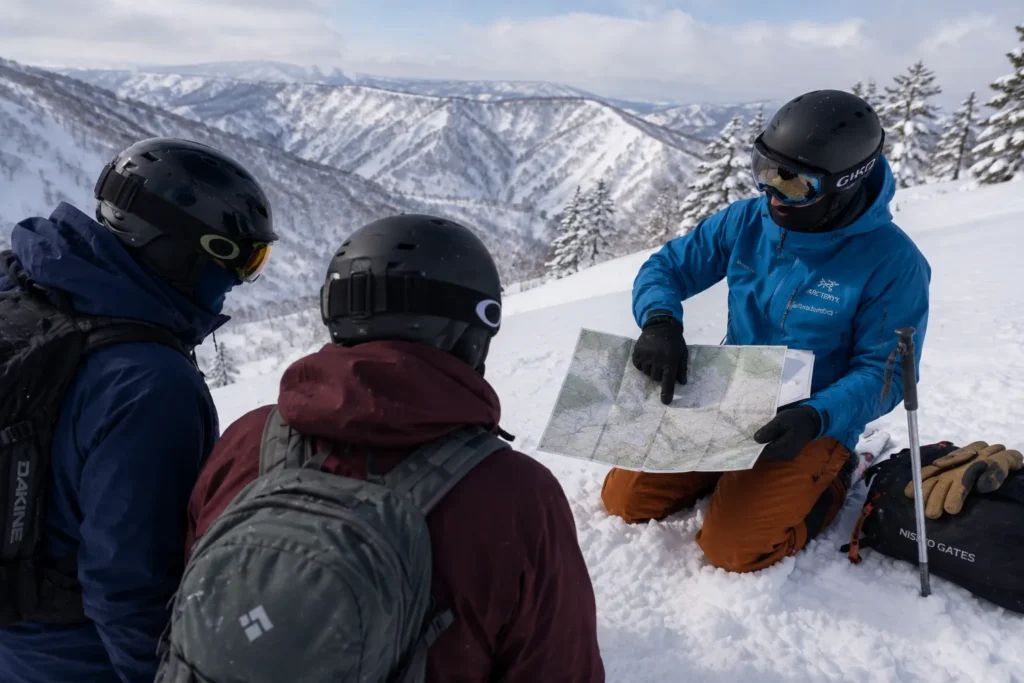
- Discussing route options with your group.
- Skiing several different descents rather than repeating a single run.
- Adjusting the plan as conditions evolve.
For many visitors, these moments between the descents become some of the most memorable parts of the day. They give you time to slow down, appreciate the landscape and see how experienced mountain travellers approach the terrain.
If you’d like to see how this works in practice, read What Does a Typical Guided Backcountry Day in Niseko Look Like?
Safety Equipment Comes First
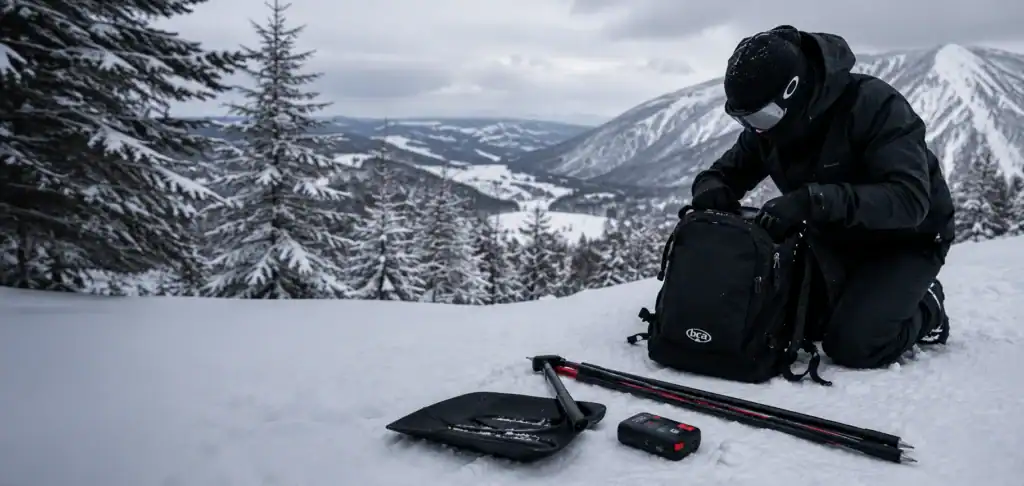
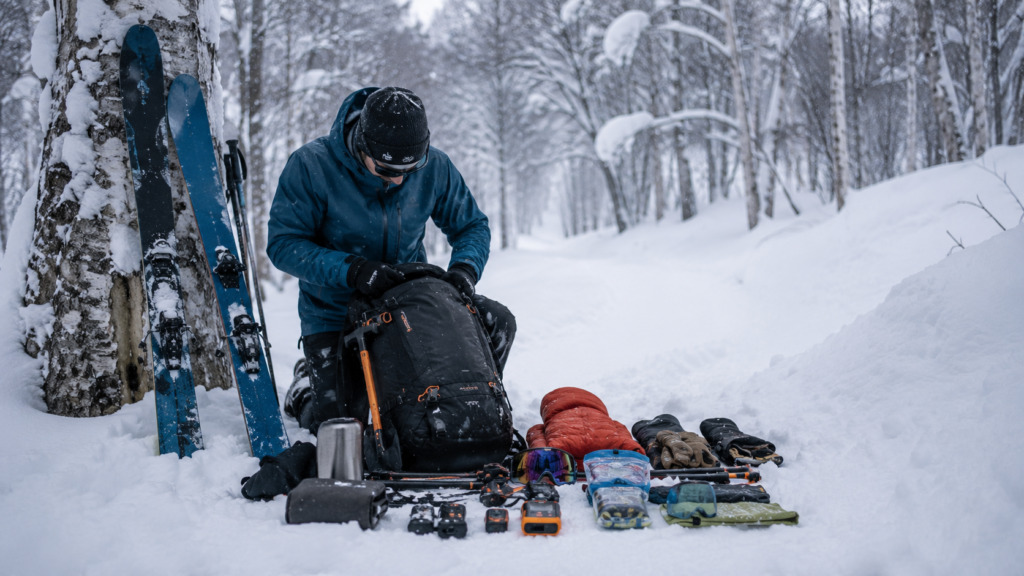
Anyone leaving the resort boundary should carry an avalanche transceiver (beacon), a shovel and a probe, and know how to use them. Owning the equipment is not enough: practise with your beacon before you go, and make sure every person in your group has a full set.
The full list, including what to wear and carry, is in our equipment checklist. To understand why the gear matters, read our avalanche awareness guide. If you’re joining a guided day, confirm in advance which equipment is provided and which items you need to bring yourself.
Get Your Clothing and Pack Ready
Preparing isn’t just about bringing the right skis. It’s about making sure every part of your setup keeps you comfortable in changing mountain conditions.
You’ll often be warmer than expected while hiking and colder during breaks or exposed sections. Layering works much better than relying on one heavy jacket. Pack the evening before, so you know where everything is when you need it, and carry food, water, spare gloves and an extra layer.
Avoid brand-new equipment on your first backcountry day. New boots, an unfamiliar pack or clothing you’ve never worn tend to create distractions you don’t need. Use what you already know and trust.
Physical Fitness Helps, but It’s Not Everything
A common concern among first-time visitors is whether they’re fit enough. The answer depends less on athletic performance than many people expect. You don’t need to be an endurance athlete to enjoy a day beyond the Niseko Gates.
You should, however, feel comfortable spending a full day outdoors in winter conditions: walking uphill for short periods, carrying a backpack and skiing variable snow throughout the day. More importantly, you need enough energy left to make good decisions late in the afternoon. Fatigue affects judgement just as much as it affects performance. A comfortable pace and regular breaks usually do more for your day than trying to move quickly.
Set the Right Expectations
Perhaps the most valuable part of preparing has nothing to do with equipment or fitness. It’s adjusting your expectations.
Many visitors arrive hoping to ski a famous line they’ve seen online, or expecting untouched powder from the first run to the last. Experienced locals approach the mountains differently. Their goal isn’t to follow a fixed plan. It’s to find the best possible experience for the conditions that exist that day.
Sometimes that means skiing deep powder. Sometimes it means choosing sheltered terrain because the wind has changed. Sometimes it means turning around and picking a completely different objective. Approaching the day with flexibility almost always leads to a better experience than chasing a single run regardless of conditions.
Most of the common errors we see come down to expectations. We cover them in Common Mistakes First-Time Visitors Make in the Niseko Backcountry.
Ask Questions Before You Arrive
Preparing doesn’t stop when you’ve packed your bag. If you’re unsure about anything, ask before the morning of your trip. Questions about equipment, clothing, meeting points or physical requirements are much easier to answer in advance than at 8:00 a.m. when everyone is ready to leave.
If you’re skiing with friends, discuss expectations beforehand too. Are you all looking for the same type of day? Is everyone comfortable with the planned pace? Do you have similar levels of experience? Starting with the same expectations makes the day better for the whole group.
A Quick Preparation Checklist
- I’ve checked the forecast, the conditions and the live gate status.
- I have a beacon, shovel and probe, and I know how to use them.
- I’m skiing with people who match my level and expectations.
- My layers, food, water and spare gloves are packed.
- I’m using equipment I already know and trust.
- I’m ready to change the plan if the conditions ask for it.
Your First Day Is the Start of a Learning Process
Many visitors think of their first backcountry day as something to complete, almost like a challenge. A better way to see it is as the beginning of a learning process. Your first day beyond the resort isn’t about skiing the biggest line or covering the most terrain. It’s about becoming comfortable in a different mountain environment, learning how the day flows and how conditions influence decisions.
When you approach it this way, there’s far less pressure to get everything right on the first attempt. And that’s often what makes people want to come back.
Which Next Step Is Right for You?
If you’re comfortable in advanced terrain and want to experience the gates with local knowledge, a Gate Guiding day is built around that: a guide chooses the terrain for the day’s conditions and you ski it with an avalanche-equipped group. If you’d like more time on foot, with skins, a Backcountry Touring day explores terrain beyond the lifts.
If your answers to the questions in the previous article were mostly “not yet,” Freeride Foundations is a better place to start: powder technique, terrain awareness and line choice in lift-accessed terrain inside the resort. Not sure which fits? Get in touch and tell us about your experience.
Weighing up whether to go with or without a guide? Read Should You Ski Niseko Gates Without a Guide?
Frequently Asked Questions
What should I pack for my first backcountry day in Niseko?
Wear winter layers, and carry food and water for the day, goggles and sunglasses suitable for changing light, sunscreen, spare gloves and an extra layer, plus your beacon, shovel and probe. If you’re joining a guided trip, confirm beforehand which safety equipment is provided. The full list is in our equipment checklist.
Do I need touring experience?
Not necessarily. Some routes involve short climbs, while others need more sustained travel. The terrain chosen should always match your experience and the day’s conditions.
Should I buy backcountry equipment before visiting Niseko?
Not always. Many first-time visitors prefer to rent specialised equipment locally before deciding what suits them best. Whatever you use, practise with it before you go.
How fit do I need to be?
You should feel comfortable spending a full day skiing in winter conditions, carrying a backpack and making short uphill efforts when required. Moderate fitness is usually enough for introductory backcountry experiences.
What if the weather changes?
Changing weather is a normal part of the mountains. Suitable clothing and realistic expectations help you enjoy the day regardless of minor changes in the forecast, and a conservative plan can be changed or cut short when conditions require it.
Final Thoughts
Preparing for your first backcountry day isn’t about controlling every detail. It’s about giving yourself the best possible foundation before stepping beyond the resort boundary. Arriving well rested, organised and open to learning lets you focus on what really matters: enjoying the mountains and building confidence.
If you’d like local advice before you arrive, you can request a Gate Guiding day or get in touch and we’ll help you choose the right option.
Continue Reading
Ready for the next step? These guides will help you keep preparing:
← PREVIOUS ARTICLE
YOU ARE READING
02 / 13
How to Prepare for Your First Backcountry Day in Niseko
NEXT ARTICLE →
- 01 — Am I Ready to Ski the Niseko Backcountry?
- 02 — How to Prepare for Your First Backcountry Day in Niseko
- 03 — Common Mistakes First-Time Visitors Make
- 04 — How the Niseko Gate System Works
- 05 — How to Choose the Right Niseko Gate for Your Ability
- 06 — How to Read Niseko’s Daily Conditions and Avalanche Report
- 07 — Should You Ski Niseko Gates Without a Guide?
- 08 — Is a Private Ski Guide Worth It in Niseko?
- 09 — What Does a Typical Guided Backcountry Day Look Like?
- 10 — How to Choose the Right Backcountry Guide in Niseko
- 11 — What Nobody Tells You About Skiing Through the Gates
- 12 — Who Gets the Most Value from a Freeride Foundations Course?
- 13 — Why People Return to Ski the Niseko Backcountry Every Winter

Still have questions?
Need help planning your backcountry experience? Get in touch with our local team.
CONTINUE READING
Common Mistakes First-Time Visitors Make in the Niseko Backcountry
◷ 7 MIN READ | ARTICLE 03 OF 13
Ready to experience the Niseko backcountry?
Whether you’re planning your first day beyond the gates or looking to develop your skills, our local guides can help you plan your experience.
THE COMPLETE GUIDE
GETTING STARTED
UNDERSTANDING THE MOUNTAIN
GUIDED BACKCOUNTRY
[…] How to Prepare for Your First Backcountry Day in Niseko […]
[…] How to Prepare for Your First Backcountry Day in Niseko […]
[…] trees, conditions and how to plan the day. If you’re preparing to ski beyond the gates, read How to Prepare for Your First Backcountry Day in Niseko as […]