UNDERSTANDING THE MOUNTAIN › ARTICLE 06 OF 13
How to Read Niseko’s Daily Conditions and Avalanche Report Before You Ski
Understanding the Information That Shapes Every Day in the Backcountry
THE COMPLETE GUIDE TO SKIING THE NISEKO BACKCOUNTRY
ARTICLE 06 / 13
One of the biggest differences between skiing inside the resort and travelling beyond the Niseko Gates is that every day starts with the same question: what are the mountains telling us today?
Many visitors check the weather forecast before breakfast. Some look at how much snow fell overnight. Others ask whether their favourite gate is open. All of that is useful, but none of it tells the whole story.
Experienced backcountry skiers don’t rely on a single number or headline. They build a picture of the mountain by combining weather, snowfall, wind, visibility and avalanche information before deciding where to go. Learning to read that information won’t turn you into an avalanche forecaster overnight, but it will help you understand why experienced mountain travellers sometimes change their plans even when the powder looks incredible.
Important
This guide explains how to read the daily information. It does not replace avalanche training, the official avalanche bulletin or a qualified guide. If you plan to travel in avalanche terrain, learn the fundamentals first: start with our avalanche awareness guide.
Mountain Conditions Are More Than Snowfall
Fresh snow gets most of the attention. After all, Niseko is famous for it. But snowfall alone doesn’t tell you what kind of day you’re about to have. Two mornings with the same snowfall totals can produce completely different conditions depending on what happened during the previous 24 hours.
Wind may have redistributed the snow. Temperatures may have changed. Visibility may be excellent, or almost non-existent. All of these factors influence how the mountain behaves. Looking beyond snowfall totals is one of the first habits people develop as they gain experience in the backcountry.

What Information Should You Look At?
Before heading out, experienced skiers build a broad overview rather than focusing on one forecast. That usually includes:
- Recent snowfall.
- Wind speed and direction.
- Temperature trends.
- Visibility.
- Weather expected throughout the day.
- Official avalanche information, where available.
- Which gates are open.
None of these should be viewed in isolation. Together they help you understand how the mountain may have changed since yesterday. You can see the day’s mountain picture on our live conditions page and the current gate status in our gate status app. The goal isn’t to predict every detail. It’s to recognise that today’s conditions are unique.
Understanding an Avalanche Report
For many first-time visitors, avalanche reports are full of unfamiliar terminology. That’s normal. Rather than trying to memorise every technical detail, start by understanding what the report is designed to do: communicate how snowpack conditions may influence avalanche hazard across different types of terrain.
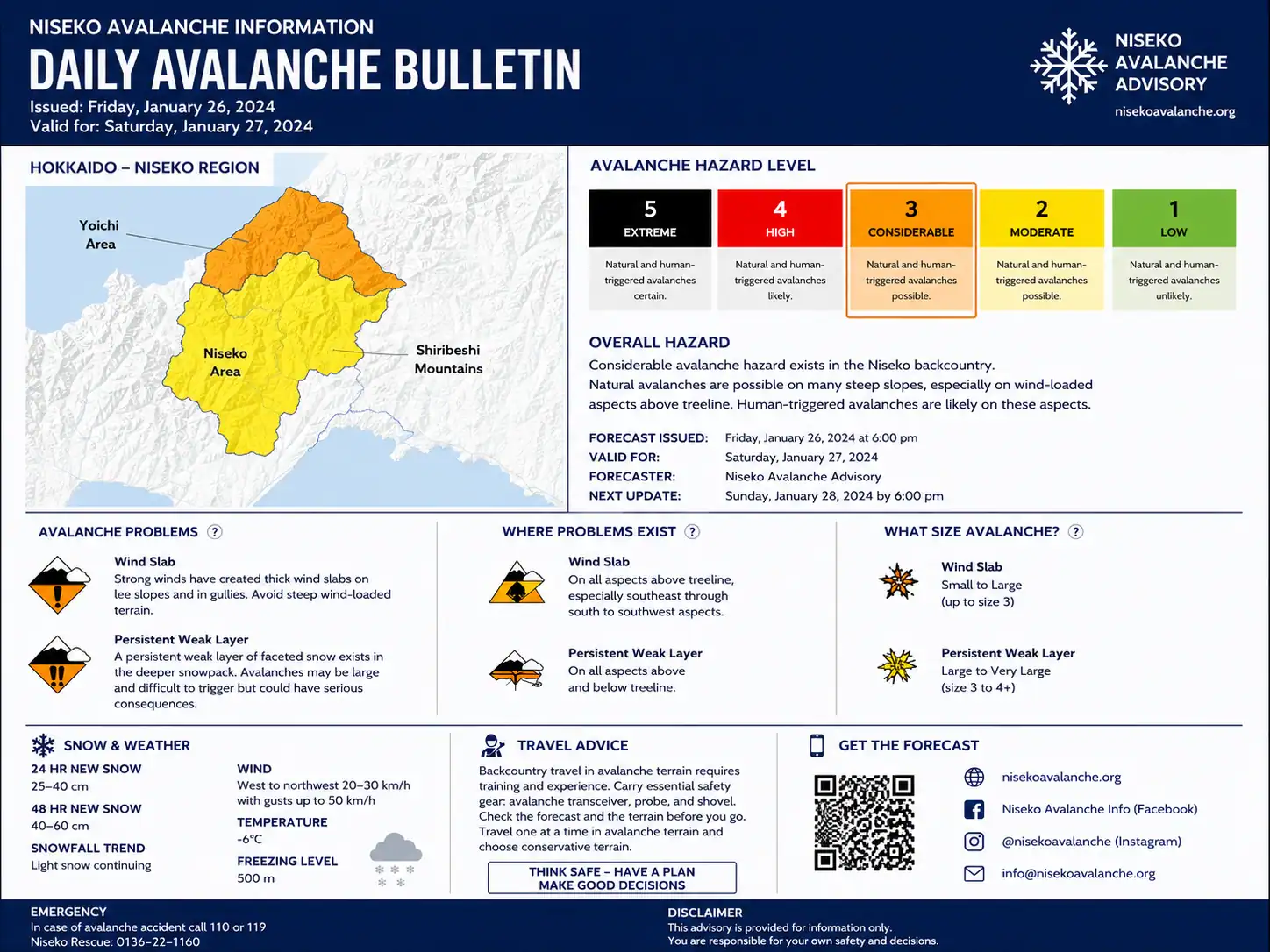
Most bulletins describe the hazard on a five-level scale, from Low to Extreme, and usually say which aspects (slope directions) and elevations are most affected and what kind of avalanche problem to expect, for example fresh storm snow or wind-deposited snow. Read those details, not just the headline number.
It is not a guarantee that one area is safe or another is unsafe. It gives experienced mountain users information to build a clearer picture of the day. Reading the report is one part of the decision-making process, never the whole process. For the principles behind it, see our avalanche awareness guide.
A Simple Morning Routine
- The evening before: check the forecast and expected snowfall and wind.
- At breakfast: open the conditions page, read the avalanche information and check the gate status.
- With your group: discuss what you’ve read and what it means for terrain choice. Agree a conservative plan and a point to turn around.
- At the gate: compare what you see with what you read, then choose the terrain that fits (how to choose a gate).
- During the day: keep observing. Change the plan if the mountain changes.
Conditions Can Change During the Day
One of the easiest mistakes is assuming the morning forecast stays accurate until the last chairlift. Visibility can disappear. The wind can strengthen. Snowfall can increase. Temperatures can rise. Experienced backcountry travellers keep observing throughout the day rather than relying only on what they read over breakfast.
Has the wind increased more than expected? Is visibility improving? Has snowfall intensified? Being willing to adapt as conditions evolve is one of the most valuable habits you can develop.
How Experienced Skiers Use This Information
One of the biggest misconceptions about mountain forecasts is that they give yes-or-no answers. In reality, experienced skiers rarely read a forecast or avalanche report and immediately decide where they’ll ski. They use it to narrow their options.
- Strong winds may suggest avoiding more exposed terrain.
- Fresh snowfall may encourage sheltered areas that preserve lighter snow.
- Poor visibility may lead to simpler objectives where navigation is straightforward.
The forecast doesn’t tell them what to do. It helps them understand which questions to ask before they leave the resort. Good mountain decisions come from combining information with observation, not from relying on a single report.
The Key Takeaway
Reading the daily conditions isn’t about finding a green light to ski. It’s about understanding the environment you’ll be travelling through, and being willing to change your plan when it changes.
Common Mistakes When Reading Conditions
Most first-time visitors don’t ignore the forecast. They place too much weight on one piece of information while overlooking the rest. Common examples:
- Focusing only on overnight snowfall totals.
- Assuming today’s conditions will be similar to yesterday’s.
- Ignoring wind because the weather looks calm in the village.
- Believing an avalanche report gives a simple “safe” or “unsafe” answer.
- Reading the morning forecast without considering how conditions may change.
Each of these creates an incomplete picture. For more of the errors we see, read Common Mistakes First-Time Visitors Make in the Niseko Backcountry.
Learning Takes Time
Understanding mountain conditions isn’t something anyone masters after reading a single forecast. Like skiing itself, it develops through experience. Each day in the mountains teaches you how weather affects the snow, how wind reshapes terrain and how visibility changes the way you move. Approaching every trip with curiosity rather than certainty is one of the best ways to build confidence.
If you’d like to learn this with someone who assesses these conditions every day, a Gate Guiding day lets you see the decisions being made, and Freeride Foundations builds terrain awareness inside the resort. You can also read Should You Ski Niseko Gates Without a Guide?
Frequently Asked Questions
Where can I check Niseko’s daily mountain conditions?
Check our live conditions page and the official avalanche information, along with the resort’s operational updates and our gate status app. Together they give you context for planning your day.
Does fresh snowfall always mean better skiing?
Not necessarily. Snowfall is only one factor. Wind, temperature and visibility all influence how the snow behaves and what the day will be like.
Does an avalanche report tell me where it’s safe to ski?
No. It provides information on current snowpack and hazard trends. It supports decision-making but does not replace judgement, training, local knowledge or experience.
How often should I check the conditions?
Review them before leaving the resort, but keep observing throughout the day, as weather and snow can change quickly.
Why do experienced skiers sometimes change their plans?
Because the mountains are constantly changing. Adapting to current conditions is a normal part of backcountry travel and often leads to a safer and more enjoyable day.
Final Thoughts
Reading Niseko’s daily conditions and avalanche information isn’t about finding a green light. It’s about understanding the environment you’ll be travelling through. The more you learn to look beyond a single snowfall number or forecast, the easier it becomes to see how experienced mountain travellers make their decisions. Over time, you begin to see the mountain as something dynamic rather than predictable, and that’s one of the most valuable lessons the backcountry can teach.
If you’d like to explore with guides who assess these conditions every day, request a Gate Guiding day or get in touch.
Continue Reading
To build on what you’ve learned, these guides are the next step:
- How the Niseko Gate System Works: how access to the backcountry is managed.
- How to Choose the Right Niseko Gate for Your Ability: how conditions influence which access point makes sense.
- Should You Ski Niseko Gates Without a Guide?: when local knowledge helps you interpret changing conditions.
- Back to The Complete Guide to Skiing the Niseko Backcountry
← PREVIOUS ARTICLE
YOU ARE READING
06 / 13
How to Read Niseko’s Daily Conditions and Avalanche Report
NEXT ARTICLE →
- 01 — Am I Ready to Ski the Niseko Backcountry?
- 02 — How to Prepare for Your First Backcountry Day in Niseko
- 03 — Common Mistakes First-Time Visitors Make
- 04 — How the Niseko Gate System Works
- 05 — How to Choose the Right Niseko Gate for Your Ability
- 06 — How to Read Niseko’s Daily Conditions and Avalanche Report
- 07 — Should You Ski Niseko Gates Without a Guide?
- 08 — Is a Private Ski Guide Worth It in Niseko?
- 09 — What Does a Typical Guided Backcountry Day Look Like?
- 10 — How to Choose the Right Backcountry Guide in Niseko
- 11 — What Nobody Tells You About Skiing Through the Gates
- 12 — Who Gets the Most Value from a Freeride Foundations Course?
- 13 — Why People Return to Ski the Niseko Backcountry Every Winter

Still have questions?
Need help planning your backcountry experience? Get in touch with our local team.
CONTINUE READING
Should You Ski Niseko Gates Without a Guide?
◷ 7 MIN READ | ARTICLE 07 OF 13
Ready to experience the Niseko backcountry?
Whether you’re planning your first day beyond the gates or looking to develop your skills, our local guides can help you plan your experience.
THE COMPLETE GUIDE
GETTING STARTED
UNDERSTANDING THE MOUNTAIN
GUIDED BACKCOUNTRY
[…] Start with our live conditions, and learn to combine them with the avalanche report in How to Read Niseko’s Daily Conditions and Avalanche Report. […]
[…] more in How to Read Niseko’s Daily Conditions and Avalanche Report and check today’s live […]
[…] Before you go, check the live conditions, the gates in real time and our guide to reading the daily conditions and avalanche report. […]