
GOING FURTHER › ARTICLE 12 OF 13
Who Gets the Most Value from a Freeride Foundations Course?
Why Learning Can Be Just as Rewarding as Finding Fresh Powder
THE COMPLETE GUIDE TO SKIING THE NISEKO BACKCOUNTRY
ARTICLE 12 / 13
Many people come to Niseko with one goal: to ski great powder. After a few days off the groomed runs, something interesting often happens. The focus begins to change. Instead of asking where the best snow is, people start asking different questions. Why did we choose this route? How do experienced skiers read the terrain? What made today different from yesterday? How do you become more confident making decisions in the mountains?
That curiosity is often the moment when a course like Freeride Foundations becomes valuable. Not because it teaches you to chase powder, but because it helps you understand the environment you’re skiing in, and ski it better.
This article explains who gets the most from it, what it covers and what it doesn’t. If you’re wondering whether you’re ready for the backcountry itself, read Am I Ready to Ski the Niseko Backcountry? first.
What Freeride Foundations Actually Is
Freeride Foundations is built to help you build the skills to ride beyond the piste. It covers four areas:
- Powder technique.
- Terrain awareness.
- Line choice.
- Mountain decision-making.
It takes place in lift-accessed terrain inside the resort boundaries, as either a four-hour morning or a full day. Skis or a snowboard are all you need: avalanche equipment is not required, because you stay within the resort. It’s designed for intermediate skiers and snowboarders and above. See the Freeride Foundations page for the details of the current format.
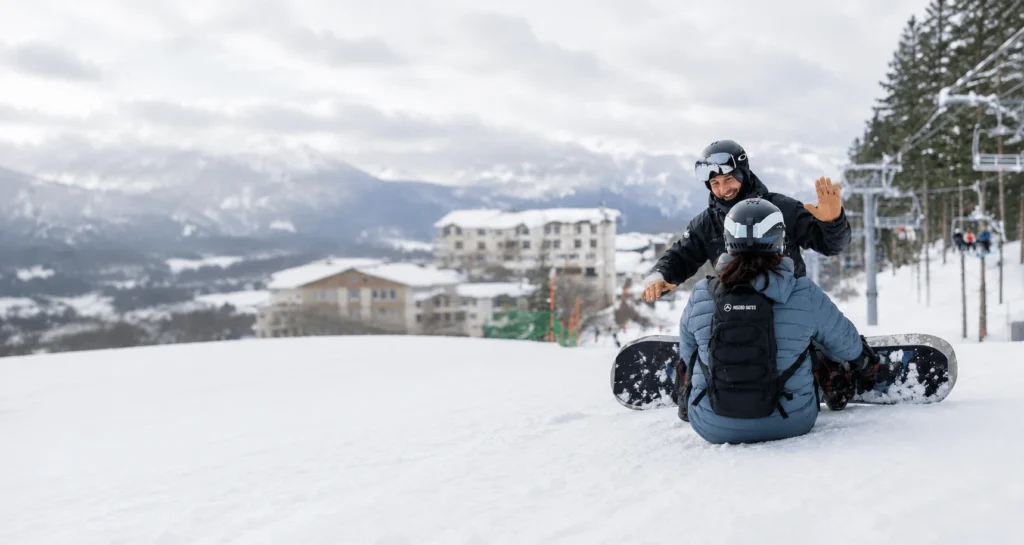
Learning Changes the Way You Experience the Mountains
Most people improve their skiing by spending more time on snow. That matters. But travelling beyond the piste involves much more than technique. It requires observation, decision-making and understanding how changing conditions influence the terrain. It also means building habits that let you move through the mountains with greater awareness.
A foundation course isn’t designed to turn someone into an expert overnight. It gives you a structured introduction to the skills and mindset that experienced mountain travellers keep developing for the rest of their lives.
It’s Not Just for Advanced Skiers
One of the biggest misconceptions about mountain education is that it’s only useful for experts. In reality, many participants are relatively new to riding off-piste. They may be confident skiers or snowboarders on the piste, but they recognise that going beyond marked runs introduces skills that aren’t learned on groomed terrain.
Understanding the mountain is very different from simply skiing well. That’s why the focus is on building confidence progressively rather than overwhelming people with technical information.
Learning Builds Confidence, Not Just Knowledge
Confidence in the mountains doesn’t come from memorising facts. It comes from understanding. When people begin recognising why experienced skiers make certain decisions, the mountains feel less mysterious. Questions gradually become observations, and observations become understanding that supports more informed decisions over time.
The goal isn’t to remove uncertainty. It’s to become more comfortable thinking about the mountains in a structured way.
Many Guests Enjoy the Learning as Much as the Skiing
Perhaps the biggest surprise for many participants is how enjoyable the learning is. A well-designed course doesn’t feel like a classroom. The mountain itself is the learning environment. Every change in weather is an opportunity to observe, every route choice becomes a conversation and every descent adds to your understanding of how conditions influence the day’s decisions.
Who Is Freeride Foundations Really For?
It isn’t aimed at one type of rider. It’s most valuable for people who want to become more confident and capable in how they ride off-piste. In particular:
- Intermediate riders comfortable on red runs who want to start riding powder and off-piste terrain.
- Advanced riders who want to refine their line choice and powder technique.
- First-time freeriders who have never left the piste and want a safe, structured start.
- Future gate riders preparing to ski beyond the Niseko Gates.
If you answered “not yet” to several of the five questions in Am I Ready to Ski the Niseko Backcountry?, this is the natural first step. If you answered yes to all of them and are comfortable in advanced terrain, you may be ready for a Gate Guiding day.
What You Should Expect, and What You Shouldn’t
You should expect to leave with a better understanding of how experienced mountain professionals observe the terrain, interpret changing conditions and make decisions, and with better powder technique and line choice. You should not expect to master backcountry travel in a single course. Mountain knowledge develops over time.
Important: What It Is Not
Freeride Foundations takes place inside the resort and does not include avalanche equipment or avalanche training. It is not an avalanche safety course and it is not a qualification. If you plan to travel in avalanche terrain, whether through the gates or elsewhere, take a dedicated avalanche course as well. You can start with the basics in our avalanche awareness guide.
Think of it as building the foundations of a house. Everything that follows becomes stronger because the base has been carefully established.
Learning Continues Long After the Course Ends
One of the greatest benefits of mountain education is that it changes the way you look at every future ski day. After a foundation course, many people ask different questions. They pay closer attention to the weather before leaving. They notice how wind affects the snow. They look at terrain more carefully instead of simply following tracks.
The course itself may only last a short time. The habits it introduces often stay for years. That’s why many experienced skiers see education as an ongoing part of their development, not a one-off.
It’s an Investment in Future Adventures
Powder lasts a day. Knowledge lasts far longer. The confidence that comes from understanding mountain environments doesn’t disappear when the snow melts at the end of the season. It becomes something you carry into every future trip, whether you return to Niseko next winter or ski other ranges around the world.
For many participants, that’s what makes the course worthwhile: not that it changes one holiday, but that it changes how they experience the mountains for years. When you’re ready for the next step, a Gate Guiding day lets you put it into practice in the backcountry, with a guide who explains the decisions as they’re made. You can also read What Does a Typical Guided Backcountry Day in Niseko Look Like?
Frequently Asked Questions
Do I need previous backcountry experience?
No. The course is designed for intermediate skiers and snowboarders and above, and takes place inside the resort. Many participants are confident on the piste and new to riding off-piste.
Is the course only about avalanche safety?
No, and it isn’t an avalanche course at all. It covers powder technique, terrain awareness, line choice and mountain decision-making inside the resort boundaries. Avalanche equipment isn’t required for the course. For avalanche training, take a dedicated course.
Will the course improve my skiing or riding technique?
Yes. Powder technique is one of the four areas covered, alongside terrain awareness, line choice and decision-making. Many participants also find that greater awareness changes how they approach different snow conditions.
Is it suitable if I’ve already joined guided tours?
Yes. Many skiers use a foundation course after discovering they want to understand the mountains rather than simply ski through them.
Is this a qualification or a starting point?
It’s a starting point. It gives you a solid base for continued learning and experience, and doesn’t claim to teach everything about backcountry travel.
How long is it, and what does it cost?
It runs as a four-hour morning or as a full day. For current prices and dates, see the Freeride Foundations page, or get in touch with any questions.
Final Thoughts
Every skier remembers their first great powder day. Far fewer remember the moment they started to truly understand the mountains. A foundation course isn’t about replacing adventure with theory. It’s about giving context to every decision, observation and experience you have beyond the piste. The more you understand the mountain, the richer every future ski day becomes, and that benefit extends far beyond a single winter in Niseko.
If you’re ready to build those foundations, see the Freeride Foundations course or ask us which option suits you.
Continue Reading
If you’re interested in developing your mountain knowledge, these articles are a natural next step:
- How to Read Niseko’s Daily Conditions and Avalanche Report Before You Ski: how experienced skiers build a picture of the mountain each morning.
- What Does a Typical Guided Backcountry Day in Niseko Look Like?: how real-world decisions unfold during a day in the mountains.
- Why People Return to Ski the Niseko Backcountry Every Winter: how learning and experience deepen the connection many visitors develop with Niseko.
- Back to The Complete Guide to Skiing the Niseko Backcountry
← PREVIOUS ARTICLE
YOU ARE READING
12 / 13
Who Gets the Most Value from a Freeride Foundations Course?
- 01 — Am I Ready to Ski the Niseko Backcountry?
- 02 — How to Prepare for Your First Backcountry Day in Niseko
- 03 — Common Mistakes First-Time Visitors Make
- 04 — How the Niseko Gate System Works
- 05 — How to Choose the Right Niseko Gate for Your Ability
- 06 — How to Read Niseko’s Daily Conditions and Avalanche Report
- 07 — Should You Ski Niseko Gates Without a Guide?
- 08 — Is a Private Ski Guide Worth It in Niseko?
- 09 — What Does a Typical Guided Backcountry Day Look Like?
- 10 — How to Choose the Right Backcountry Guide in Niseko
- 11 — What Nobody Tells You About Skiing Through the Gates
- 12 — Who Gets the Most Value from a Freeride Foundations Course?
- 13 — Why People Return to Ski the Niseko Backcountry Every Winter

Still have questions?
Need help planning your backcountry experience? Get in touch with our local team.

CONTINUE READING
Why People Return to Ski the Niseko Backcountry Every Winter
◷ 6 MIN READ | ARTICLE 13 OF 13
Ready to experience the Niseko backcountry?
Whether you’re planning your first day beyond the gates or looking to develop your skills, our local guides can help you plan your experience.
THE COMPLETE GUIDE
GETTING STARTED
UNDERSTANDING THE MOUNTAIN
GUIDED BACKCOUNTRY