UNDERSTANDING THE MOUNTAIN › ARTICLE 04 OF 13
How the Niseko Gate System Works
Understanding the Rules, Purpose and Responsibilities Behind Niseko’s Backcountry Access System
THE COMPLETE GUIDE TO SKIING THE NISEKO BACKCOUNTRY
ARTICLE 04 / 13
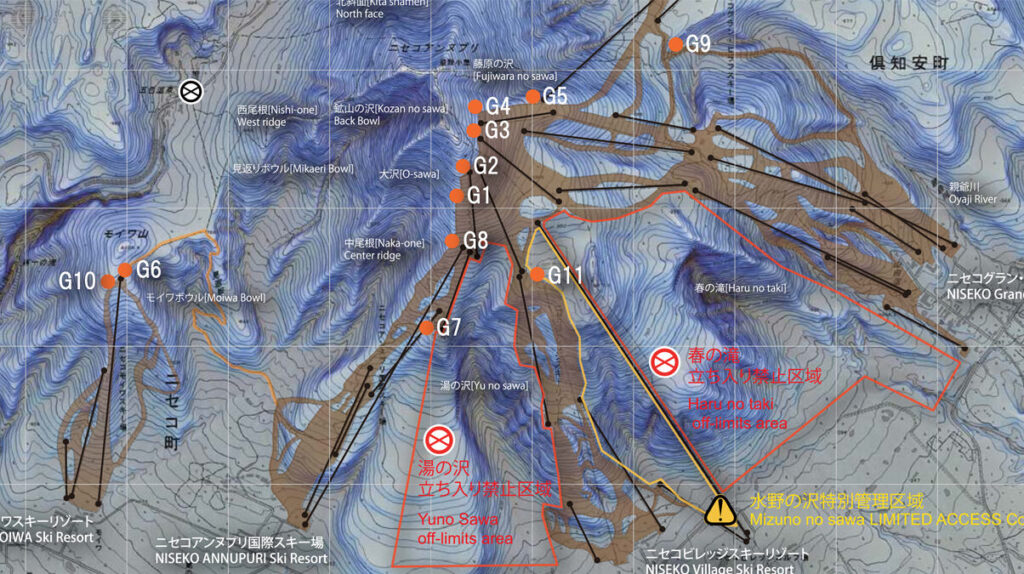
If you’ve spent any time researching skiing in Niseko, you’ve almost certainly come across the famous Niseko Gates. You’ll hear people talking about Gate 3, Gate 5 or Gate 11 as if everyone already knows what they mean. For first-time visitors, it can be confusing. Are they ski lifts? Are they entrances to specific runs? Do you need a permit to use them?
The answer is simpler than it sounds. The Niseko Gate System is a controlled access system that lets skiers and snowboarders leave the resort at designated locations and enter backcountry terrain beyond the ski area boundary. Rather than allowing people to exit wherever they choose, Niseko has created clearly marked access points that help manage how visitors move between the resort and the surrounding mountains.
Understanding how this works is one of the first steps towards making informed decisions beyond the resort. Not sure whether you should be going through a gate at all? Start with Am I Ready to Ski the Niseko Backcountry?
Why Does the Gate System Exist?
At first glance, some visitors assume the gates are simply there to control access. Their purpose is broader. The system was developed to encourage safer movement between the resort and the surrounding backcountry, while helping protect both visitors and the mountain environment.
Without designated access points, people would be more likely to leave the ski area in unsuitable places, increasing exposure to hazards and making it harder to manage skier movement. By funnelling access through specific gates, the system creates a more predictable way to move from managed resort terrain into unmanaged mountain terrain.
It also reinforces an important message. Crossing a gate is not simply moving onto another ski run. It’s entering an environment where conditions, route choices and decision-making become your own responsibility.

What Changes Once You Pass Through a Gate?
This is the most important concept to understand. Inside the resort, the ski area manages many of the risks: runs are marked, boundaries are clearly defined and ski patrol monitors the mountain throughout the day. Beyond the gates, that managed environment ends.
- You’re travelling in natural mountain terrain.
- Snow conditions may differ significantly from those inside the resort.
- Visibility can change quickly.
- Terrain becomes more complex, and routes are no longer marked.
- There is no avalanche control and no patrol watching your descent.
This doesn’t mean skiing beyond the gates is inherently reckless. It means the environment changes, and with it the responsibilities of every skier and snowboarder. You’ll need avalanche safety equipment and the knowledge to use it: see our equipment checklist and avalanche awareness guide. Understanding that transition matters far more than memorising the location of individual gates.
Why Do Gates Open and Close?
One of the questions we hear most often is: “Why is my favourite gate closed today?” The simple answer is that gates are managed according to mountain conditions. Weather, snowfall, wind, visibility and other operational factors all influence whether a gate can be opened safely. Because conditions change constantly, gate status can change from one day to the next, or even during the same day.
A closed gate isn’t a suggestion. It’s a closure. Respecting closures protects individual skiers and everyone working to manage access across the mountain. You can check the live status of each gate in our gate status app, read about each one on our Niseko gates page, and see the day’s mountain picture on our conditions page. The official rules are in the gate access protocols.
Experienced visitors quickly learn that flexibility is one of the most valuable qualities in Niseko. Rather than planning an entire day around one specific gate, they adapt to the conditions available that morning.
The Gates Are Access Points, Not Destinations
One of the biggest misconceptions among first-time visitors is believing that the gate itself is the objective. A gate is simply where the journey begins. Different routes, terrain and descent options may exist beyond the same access point depending on snow conditions, visibility and the decisions you make once you’re outside the boundary.
That’s why experienced mountain travellers rarely talk about “skiing Gate 5” or “skiing Gate 11.” They talk about travelling through a particular gate to reach the terrain that best suits the day. Thinking this way leads to much better decisions than treating each gate as a fixed destination.
The Gate Doesn’t Make the Decision, You Do
An open gate is not a recommendation. It simply means access is permitted. Whether crossing it is right for you depends on your experience, the day’s conditions, your objectives and your ability to travel confidently in backcountry terrain.
It’s easy to assume that because a gate is open, the terrain beyond it is suitable for everyone. That isn’t how the system works. The gates provide access, not guidance, and every skier and snowboarder remains responsible for their own decisions after leaving the resort boundary.
The Key Takeaway
The gates exist to manage access, not to remove responsibility. An open gate means you may go through. It never means it’s safe, or right for you, today.
Respecting the Gate System Benefits Everyone
The Niseko Gate System has become internationally recognised because it balances access with responsibility. It allows visitors to experience the surrounding mountains while encouraging people to enter through designated locations rather than creating their own exit points.
Respecting the system isn’t just about following resort rules. It also protects the experience for everyone who visits after you. Using designated gates, respecting closures and accepting that conditions change from day to day all contribute to a culture of responsible backcountry travel that has developed in Niseko over many years.
Common Misunderstandings About the Niseko Gates
Because the system is unique, first-time visitors often arrive with incorrect assumptions. Here are the most common ones.
“The gates are advanced ski runs.”
They’re not. The gates are access points leading beyond the managed ski area. What lies beyond depends entirely on the terrain and conditions outside the resort.
“If a gate is open, it’s safe for everyone.”
Not necessarily. An open gate means access is available. It doesn’t mean every route beyond it is appropriate for every skier or snowboarder.
“Every gate offers the same type of terrain.”
No. Each access point leads towards different parts of the mountain, with different terrain and route options. Choosing which gate suits you is a separate decision, which we cover in How to Choose the Right Niseko Gate for Your Ability.
“Once I’m through the gate, the route is obvious.”
Not always. Unlike marked ski runs, backcountry terrain isn’t signposted. Navigation and route selection are part of the experience beyond the boundary.
Understanding the System Is the First Step
Many people spend hours researching which gate to ski. Far fewer spend time understanding how the system itself works. Ironically, understanding the purpose of the gates is more valuable than memorising gate numbers. Once you see that the system exists to manage access and not to remove responsibility, the rest of the backcountry experience makes much more sense. You’ll make better decisions, and you’ll understand why experienced locals talk far more about conditions than about specific gates. To learn how to read those conditions, see How to Read Niseko’s Daily Conditions and Avalanche Report.
Gates and Guiding
Knowing how the system works is the first step. Applying it in real mountain conditions comes with experience. On a Gate Guiding day, a local guide chooses the gate and the terrain for the day’s conditions and the group, and explains the decisions as you go. If you’re weighing up whether to go independently, read Should You Ski Niseko Gates Without a Guide?
Frequently Asked Questions
What is the Niseko Gate System?
The Niseko Gate System is a network of designated access points that allow skiers and snowboarders to leave the resort and enter the surrounding backcountry terrain in a controlled and responsible way.
Why do the gates sometimes close?
Gate status depends on mountain and operational conditions, including weather, snowfall, wind and visibility. Closures help manage access when conditions aren’t suitable.
Can anyone use the Niseko Gates?
Anyone can approach the gates, but passing through should only be considered by people who understand the responsibilities of travelling beyond the managed ski area, and who carry the right equipment and know how to use it.
Are the gates part of the ski resort?
The gates are located on the resort boundary, but once you pass through them you are leaving the managed ski area and entering backcountry terrain.
Is every gate suitable for beginners?
No. Each gate gives access to different terrain. The right choice depends on your experience, your objectives and the day’s mountain conditions.
Final Thoughts
The Niseko Gate System isn’t complicated once you understand its purpose. It’s not there to tell you where to ski. It’s a structured, responsible way of moving from the managed environment of the resort into the surrounding backcountry.
Understanding that changes how you approach the mountains. Instead of asking which gate is best, you start thinking about today’s conditions, your experience and your objectives. If you’d like to explore with local guides, you can request a Gate Guiding day or get in touch.
Continue Reading
If you now understand how the system works, these guides build on that knowledge:
- How to Choose the Right Niseko Gate for Your Ability: how different access points suit different skiers and objectives.
- How to Read Niseko’s Daily Conditions and Avalanche Report Before You Ski: how daily conditions influence decisions before you leave the resort.
- Should You Ski Niseko Gates Without a Guide?: factors that help you decide between independent and guided travel.
- Back to The Complete Guide to Skiing the Niseko Backcountry
← PREVIOUS ARTICLE
YOU ARE READING
04 / 13
How the Niseko Gate System Works
NEXT ARTICLE →
- 01 — Am I Ready to Ski the Niseko Backcountry?
- 02 — How to Prepare for Your First Backcountry Day in Niseko
- 03 — Common Mistakes First-Time Visitors Make
- 04 — How the Niseko Gate System Works
- 05 — How to Choose the Right Niseko Gate for Your Ability
- 06 — How to Read Niseko’s Daily Conditions and Avalanche Report
- 07 — Should You Ski Niseko Gates Without a Guide?
- 08 — Is a Private Ski Guide Worth It in Niseko?
- 09 — What Does a Typical Guided Backcountry Day Look Like?
- 10 — How to Choose the Right Backcountry Guide in Niseko
- 11 — What Nobody Tells You About Skiing Through the Gates
- 12 — Who Gets the Most Value from a Freeride Foundations Course?
- 13 — Why People Return to Ski the Niseko Backcountry Every Winter

Still have questions?
Need help planning your backcountry experience? Get in touch with our local team.

CONTINUE READING
How to Choose the Right Niseko Gate for Your Ability
◷ 8 MIN READ | ARTICLE 05 OF 13
Ready to experience the Niseko backcountry?
Whether you’re planning your first day beyond the gates or looking to develop your skills, our local guides can help you plan your experience.
THE COMPLETE GUIDE
GETTING STARTED
UNDERSTANDING THE MOUNTAIN
GUIDED BACKCOUNTRY
[…] No long lift lines that morning, which helped us move fast toward the upper mountain. If you’re new to the gates, read how the Niseko gate system works. […]