GUIDED BACKCOUNTRY › ARTICLE 10 OF 13
How to Choose the Right Backcountry Guide in Niseko
What to Look For When Comparing Guides and Operators
THE COMPLETE GUIDE TO SKIING THE NISEKO BACKCOUNTRY
ARTICLE 10 / 13
If you’ve decided that skiing with a guide is the right choice, the next question is: which guide? A quick search shows dozens of options. Different companies, different prices, different qualifications, different promises. At first glance many tours look almost identical. They all mention powder, they all show beautiful photos and they all promise an unforgettable day.
So how do you decide? The answer usually has less to do with finding the best guide and more to do with finding the one that fits you. This guide gives you a practical way to compare any Niseko backcountry guide or operator, including us.
If you haven’t yet decided between guided and independent, read Should You Ski Niseko Gates Without a Guide? first.
Start by Thinking About Your Own Goals
Before comparing operators, spend a few minutes on what you actually want from the day. Some visitors want to experience the Niseko backcountry safely for the first time. Others hope to ski as much quality terrain as possible in a short holiday. Some want to improve their mountain knowledge. Others are travelling with family or friends and want a relaxed day that suits everyone.
All of these are valid. The clearer you are about your priorities, the easier it is to see which guide or company is likely to match them.
Local Knowledge Makes a Difference
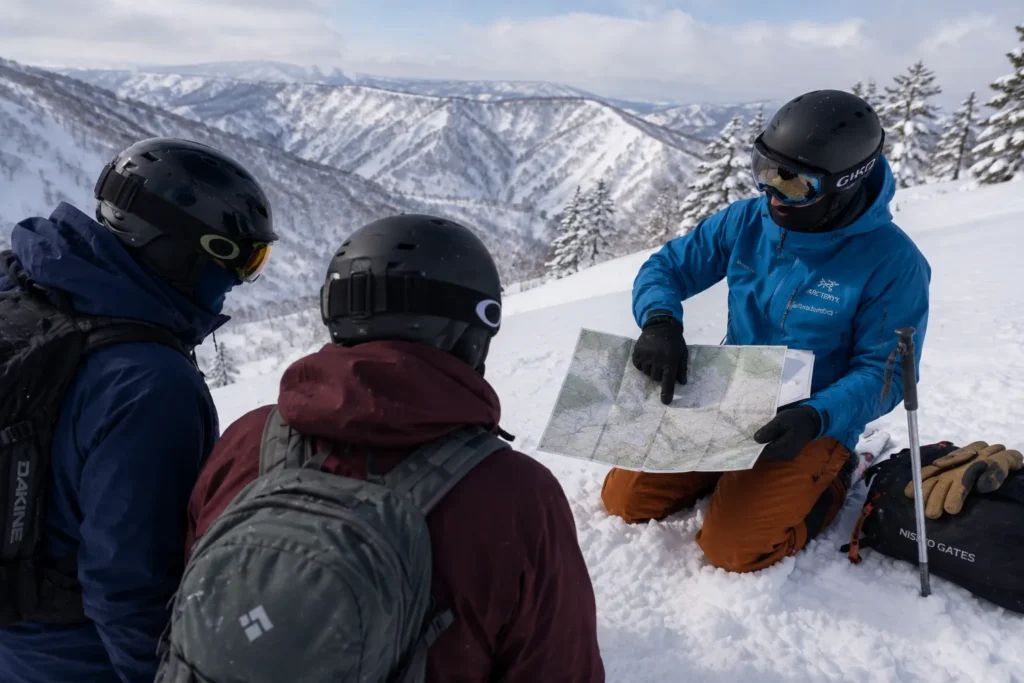
One quality consistently stands out: local experience. Niseko changes remarkably through the winter. Snowfall, wind, visibility and temperature shape the mountain every day. Guides who spend the whole season here build an understanding that goes far beyond knowing where the runs are. They learn how the mountain behaves, which areas respond well to particular weather patterns, how conditions evolve through the day and when changing the plan is the smartest decision.
That perspective shapes the experience more than visitors realise before arriving. You can see it in practice in our guiding stories: Navigating the Storm: Gate Guiding in Challenging Conditions shows a day rebuilt around wind and gate closures.
Qualifications Matter, but They’re Only Part of the Picture
Professional qualifications matter. They show formal training, professional standards and a commitment to safe mountain travel. Don’t be shy about asking a guide or company what training they have and what it covers, including avalanche training and first aid.
But qualifications don’t tell the whole story. Experience guiding in Niseko, clear communication, the ability to adapt to changing conditions and understanding different types of guests often have just as much influence on how good the day is. The strongest guides combine technical expertise with sound judgement and the ability to build a day that suits the people they’re skiing with.
Communication Is More Important Than Many People Expect
A guided day isn’t about following someone through the mountains. The best experiences feel collaborative. Good guides explain why plans change, answer questions and help guests understand what they’re seeing. They create an environment where it’s easy to ask questions all day. That turns following tracks into genuinely learning about the mountains, and for many visitors those conversations become a highlight of the trip.
Questions Worth Asking Before You Book
Once you’ve narrowed down a few options, ask some simple questions. You’re not looking for a perfect guide. You’re checking whether the experience matches what you want. Consider asking:
- What qualifications and avalanche training do your guides have?
- How long have you been guiding in Niseko?
- What type of guests do you most commonly guide?
- How is the itinerary adapted if the weather or snow conditions change?
- What group size do you work with?
- Is the day only about skiing, or is there an educational element too?
- What level of skiing or backcountry experience do you recommend for this tour?
- What avalanche equipment is required, and is rental available?
- What happens if the weather is poor or a gate is closed?
The answers often reveal more than a list of features on a website. They show the guide’s philosophy, communication style and how they approach a day in the mountains.
Look Beyond the Photos
Every guide in Niseko has photos of deep powder. That’s hardly surprising. What tells you more about an operator is how they describe the experience. Do they talk only about chasing powder? Or do they also explain how they adapt to conditions, work with different ability levels and help guests understand the mountains?
Great photography may inspire you to book. Clear communication helps you choose the experience that’s actually right for you.
Some Warning Signs
A few things should make you pause when comparing operators:
- Guaranteed powder or guaranteed lines. Nobody can promise that.
- No requirement for avalanche equipment, or no questions about your experience and level.
- Vague answers about group size, what’s included or how bad weather is handled.
- A promise to take you wherever you want regardless of the conditions.
- Pressure to book quickly before you’ve had your questions answered.
Reviews Can Tell You More Than Ratings
Most guiding companies have positive reviews. Instead of only looking at the overall score, read what guests actually say and look for recurring themes. Do people mention how well the guide communicated? Do they talk about feeling included in decisions? Do both experienced skiers and first-time visitors describe positive days? Reviews that consistently mention professionalism, flexibility and local knowledge tell you more than a five-star rating alone.
The Best Guide Is the One Who Fits Your Trip
It’s easy to assume there’s a single best guide in Niseko. In reality, different guides excel at different experiences. Some specialise in introducing visitors to the backcountry. Others focus on longer, more demanding objectives. Some work mostly with families and mixed-ability groups, and others spend the winter guiding highly experienced skiers. Choosing well isn’t about the most famous name. It’s about finding someone whose style matches the experience you want.
The Key Takeaway
Compare guides on local knowledge, qualifications, communication and fit, not on photos or price alone. Ask the questions above, and notice how clearly you get answers.
How We Would Answer These Questions
It’s only fair to answer the questions above ourselves. Our Gate Guiding days are private, for groups of up to four people, and skiers and snowboarders can ride together. They are full-day experiences designed for advanced skiers and snowboarders, built around local knowledge, route selection and mountain decision-making. Every participant carries a beacon, shovel and probe, and rental may be available on request, subject to availability.
The itinerary is built around the conditions on the day, not a fixed route, and you’ll see how that works in our guiding stories, such as A Special Guiding Day in Niseko: Not Perfect Conditions, Still Pure Japan and First Guiding Day of the Season. For a step-by-step view of a day, read What Does a Typical Guided Backcountry Day in Niseko Look Like? For questions about our guides’ experience and training, ask us directly through the contact form and we’ll answer them in writing.
If you’re not yet at an advanced level, Freeride Foundations is built for that stage, and if you want more time on foot, take a look at Backcountry Touring.
Frequently Asked Questions
Should I choose a guide based on price?
Price is one factor, but it shouldn’t be the only one. Experience, local knowledge, communication and guiding style usually have a much greater effect on the quality of your day. Check what the price includes and whether it’s per group or per person.
Are qualifications important?
Yes. Professional qualifications show formal training and commitment to industry standards. They are an important part of the picture, alongside local experience and guiding style. Ask what they cover.
Does local experience really make a difference?
Yes. Guides who spend the winter in Niseko understand how the mountain responds to changing weather and snow in a way visitors can’t learn in a short holiday.
Should I book a private guide or join a group?
That depends on your priorities. If you’re unsure which format suits you best, read Is a Private Ski Guide Worth It in Niseko?
How far in advance should I book?
Popular periods can get busy, especially around peak holiday dates. Contacting a guide early gives you the widest choice of dates. You can send us a request with your preferred dates and your experience, and we’ll reply with what’s available.
Final Thoughts
Choosing a backcountry guide isn’t about finding the company with the biggest promises. It’s about finding people whose experience, communication and approach match the day you want to have. A great guide doesn’t just lead the way. They help you understand the mountain, adapt to changing conditions and make the most of the day’s opportunities. When those elements come together, the result is far more memorable than the skiing alone.
If you’d like to talk it through, request a Gate Guiding day or get in touch.
Continue Reading
To complete your planning, these guides answer the remaining questions many visitors have before booking:
- Should You Ski Niseko Gates Without a Guide?: decide whether independent or guided skiing suits your experience.
- Is a Private Ski Guide Worth It in Niseko?: what a private day buys, and who benefits most.
- What Does a Typical Guided Backcountry Day in Niseko Look Like?: how a guided day unfolds from start to finish.
- Back to The Complete Guide to Skiing the Niseko Backcountry
← PREVIOUS ARTICLE
YOU ARE READING
10 / 13
How to Choose the Right Backcountry Guide in Niseko
NEXT ARTICLE →
- 01 — Am I Ready to Ski the Niseko Backcountry?
- 02 — How to Prepare for Your First Backcountry Day in Niseko
- 03 — Common Mistakes First-Time Visitors Make
- 04 — How the Niseko Gate System Works
- 05 — How to Choose the Right Niseko Gate for Your Ability
- 06 — How to Read Niseko’s Daily Conditions and Avalanche Report
- 07 — Should You Ski Niseko Gates Without a Guide?
- 08 — Is a Private Ski Guide Worth It in Niseko?
- 09 — What Does a Typical Guided Backcountry Day Look Like?
- 10 — How to Choose the Right Backcountry Guide in Niseko
- 11 — What Nobody Tells You About Skiing Through the Gates
- 12 — Who Gets the Most Value from a Freeride Foundations Course?
- 13 — Why People Return to Ski the Niseko Backcountry Every Winter

Still have questions?
Need help planning your backcountry experience? Get in touch with our local team.
CONTINUE READING
What Nobody Tells You About Skiing Through the Niseko Gates
◷ 6 MIN READ | ARTICLE 11 OF 13
Ready to experience the Niseko backcountry?
Whether you’re planning your first day beyond the gates or looking to develop your skills, our local guides can help you plan your experience.
THE COMPLETE GUIDE
GETTING STARTED
UNDERSTANDING THE MOUNTAIN
GUIDED BACKCOUNTRY